Experimental Sciences Building Proposal
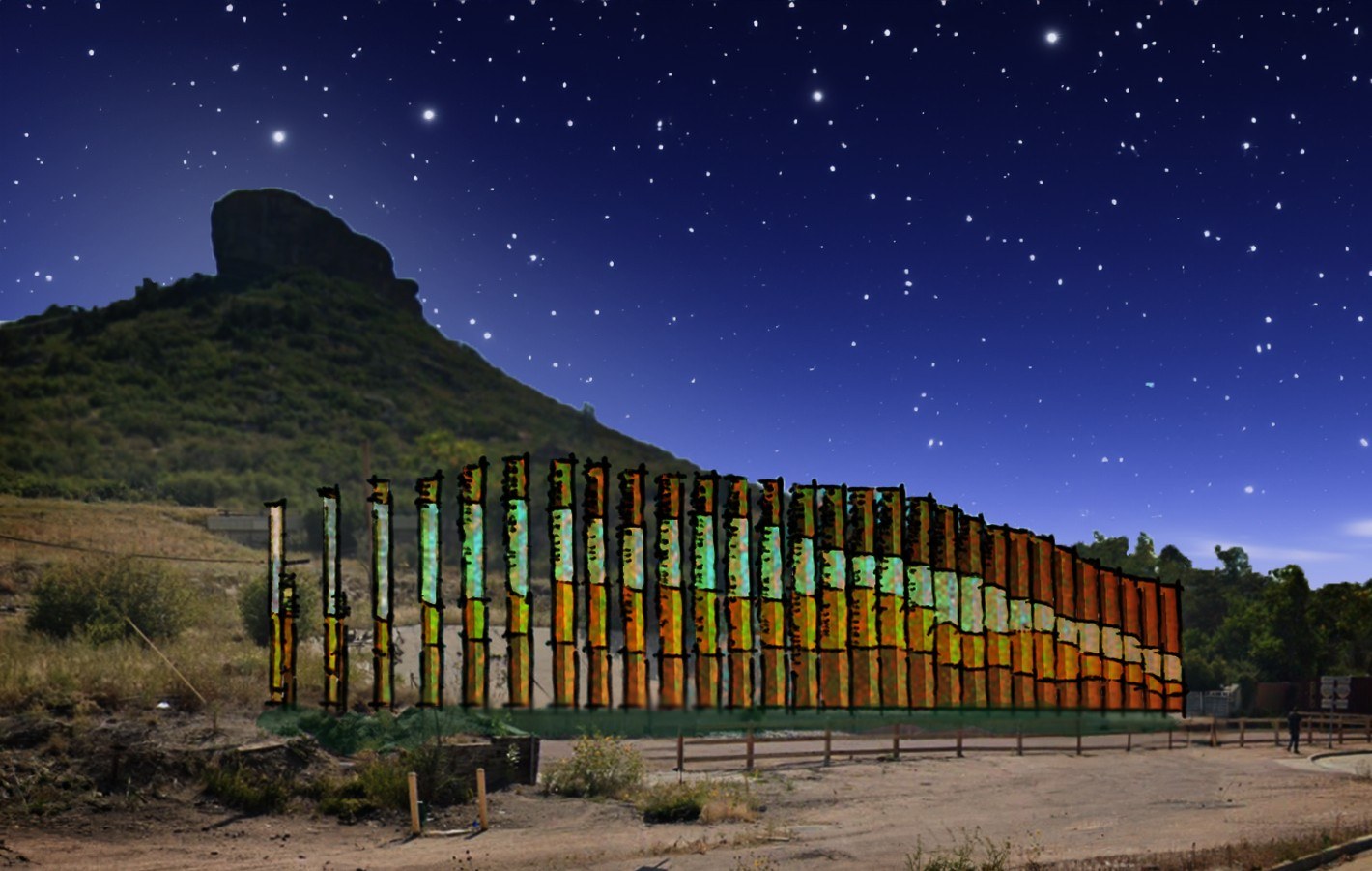
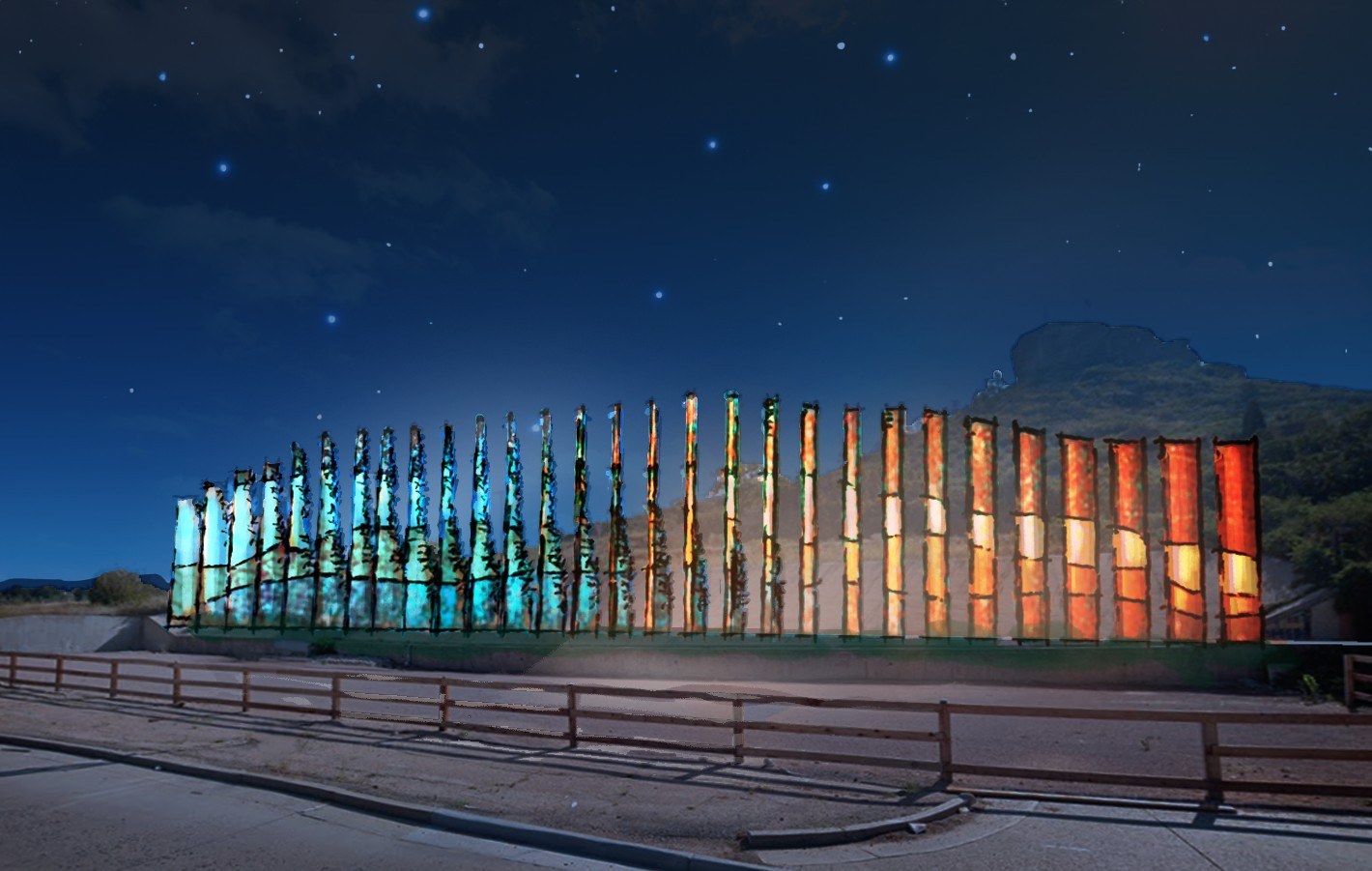
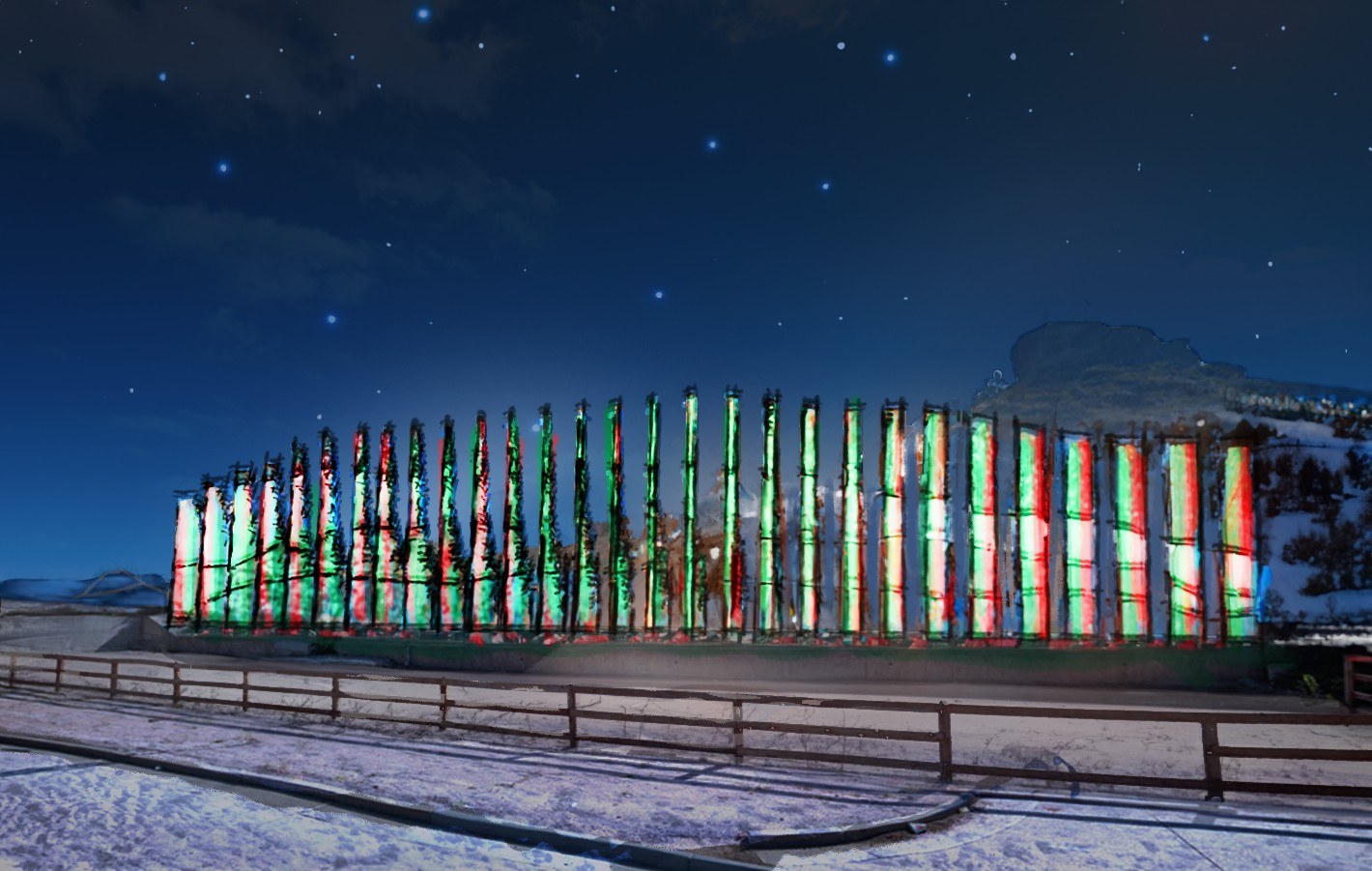
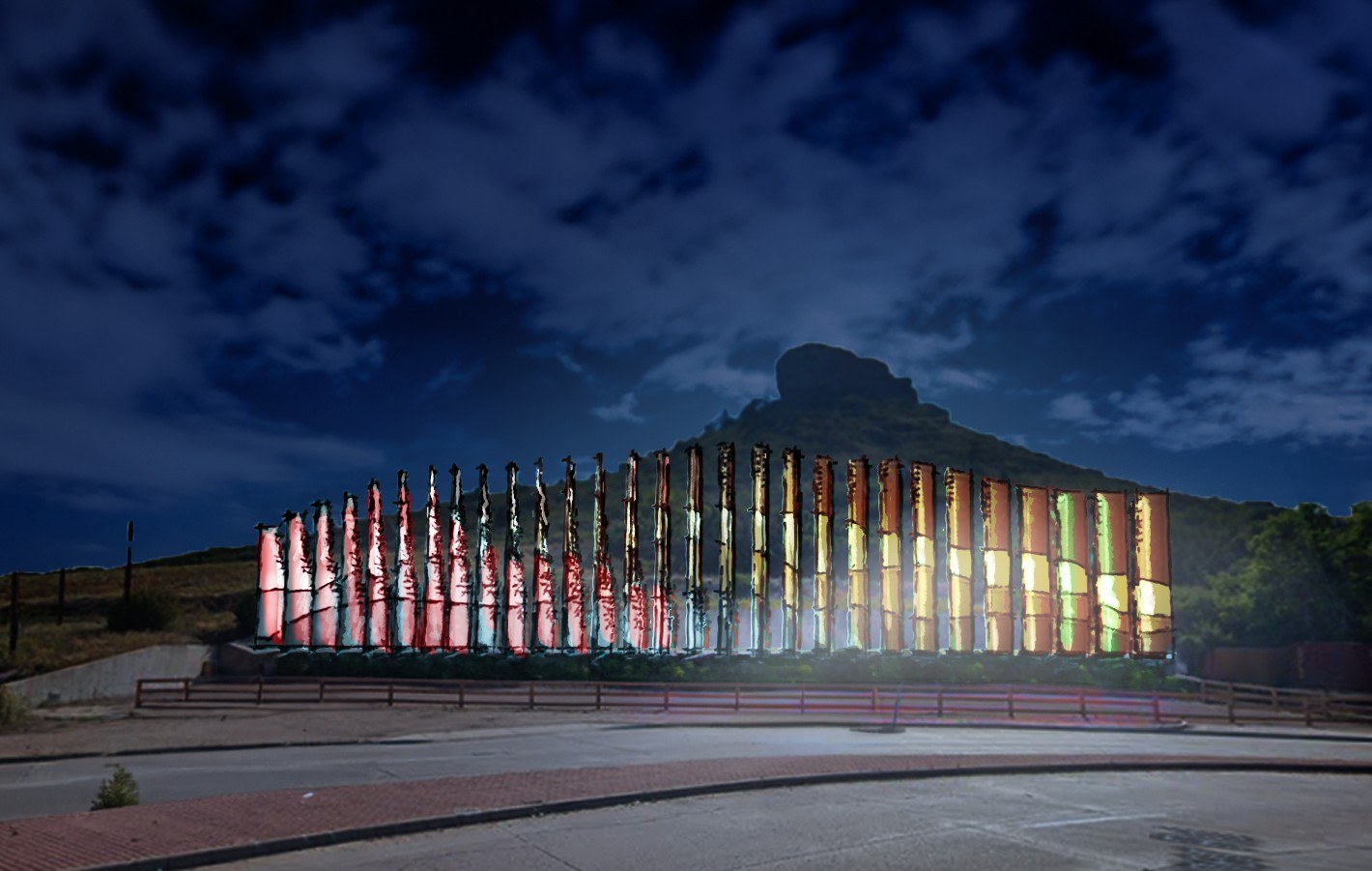
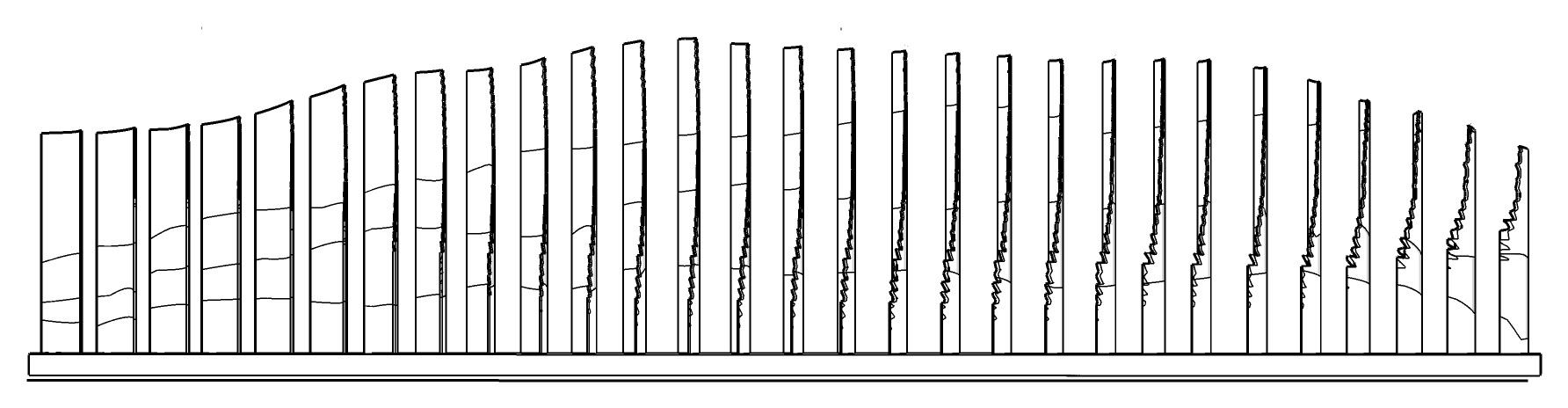
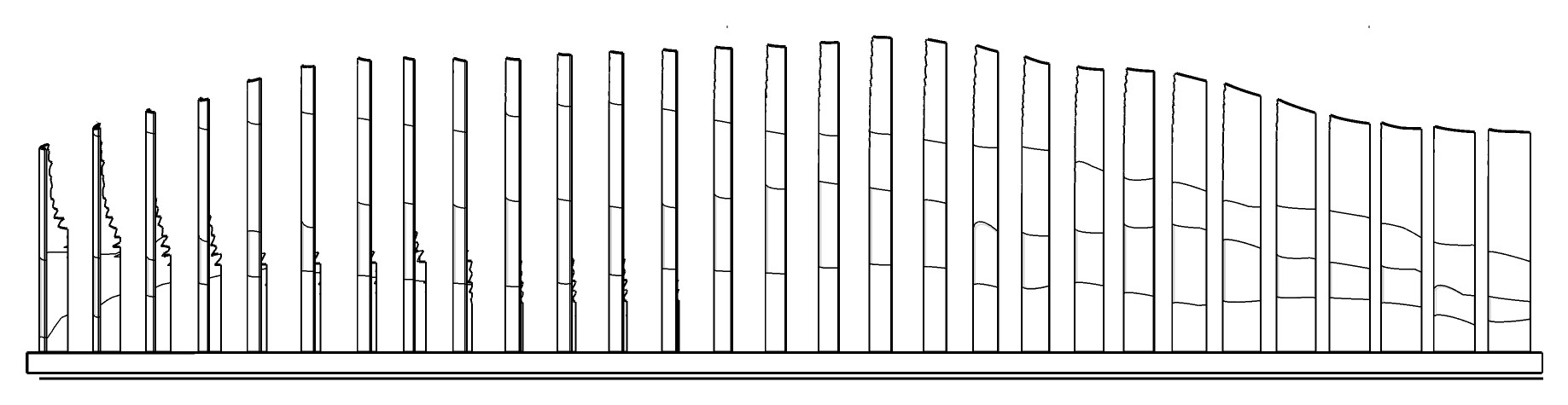
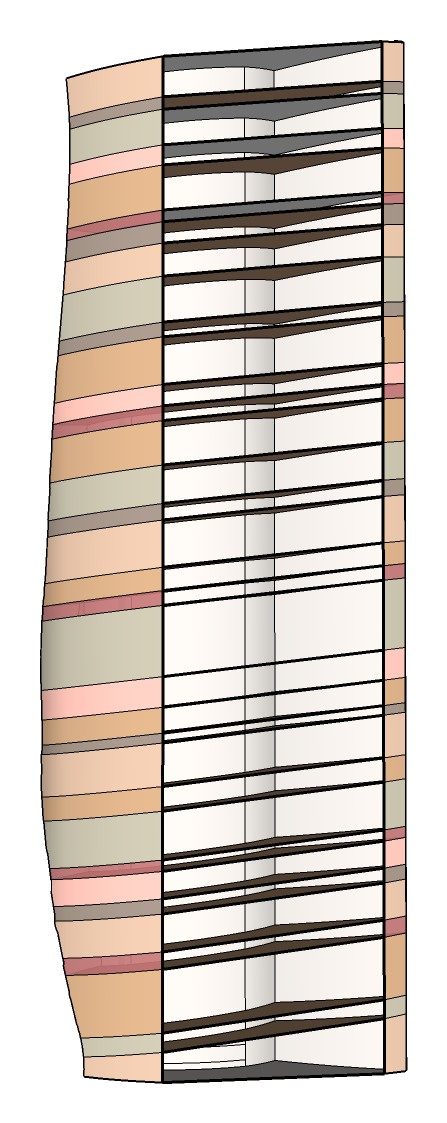
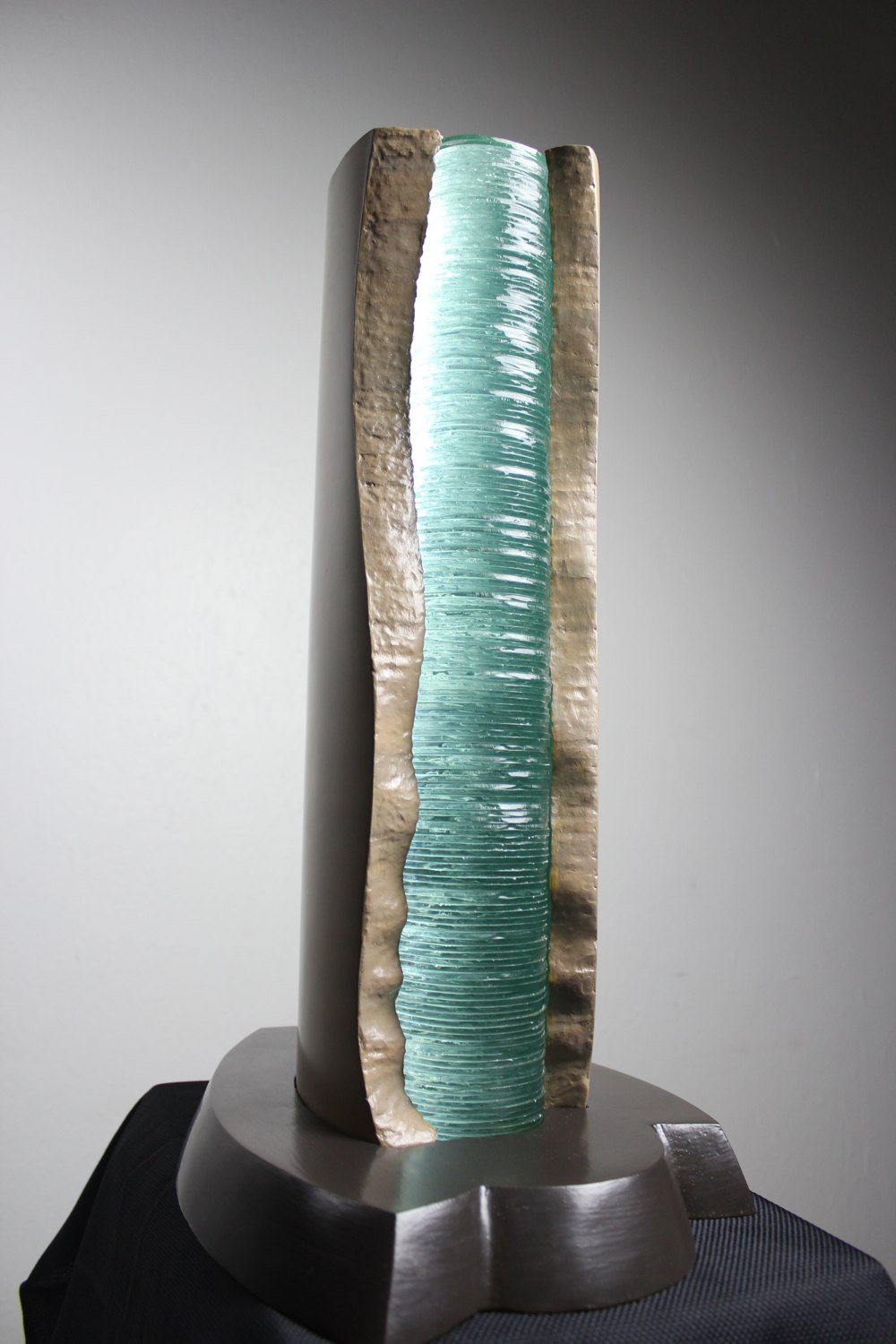
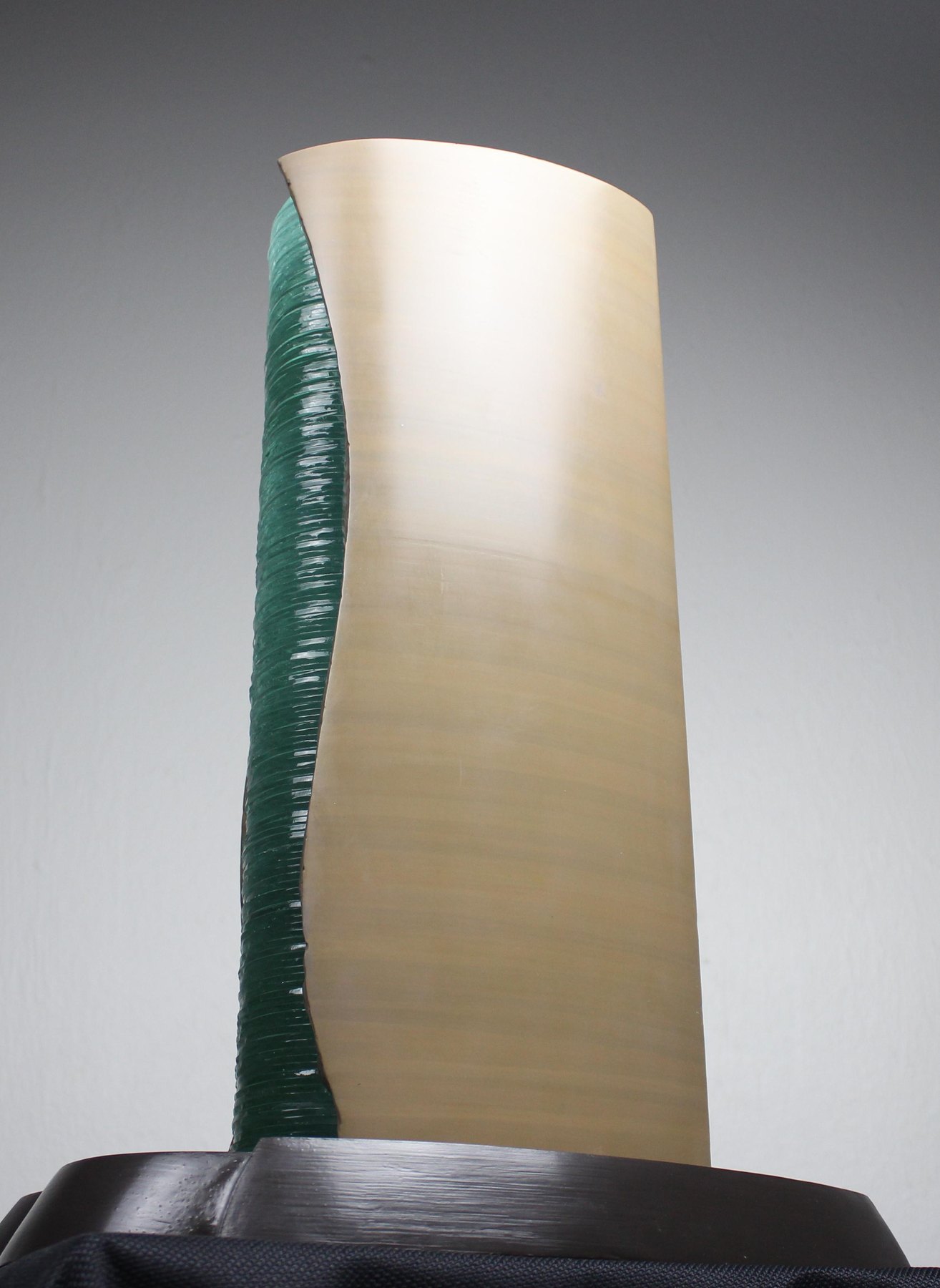
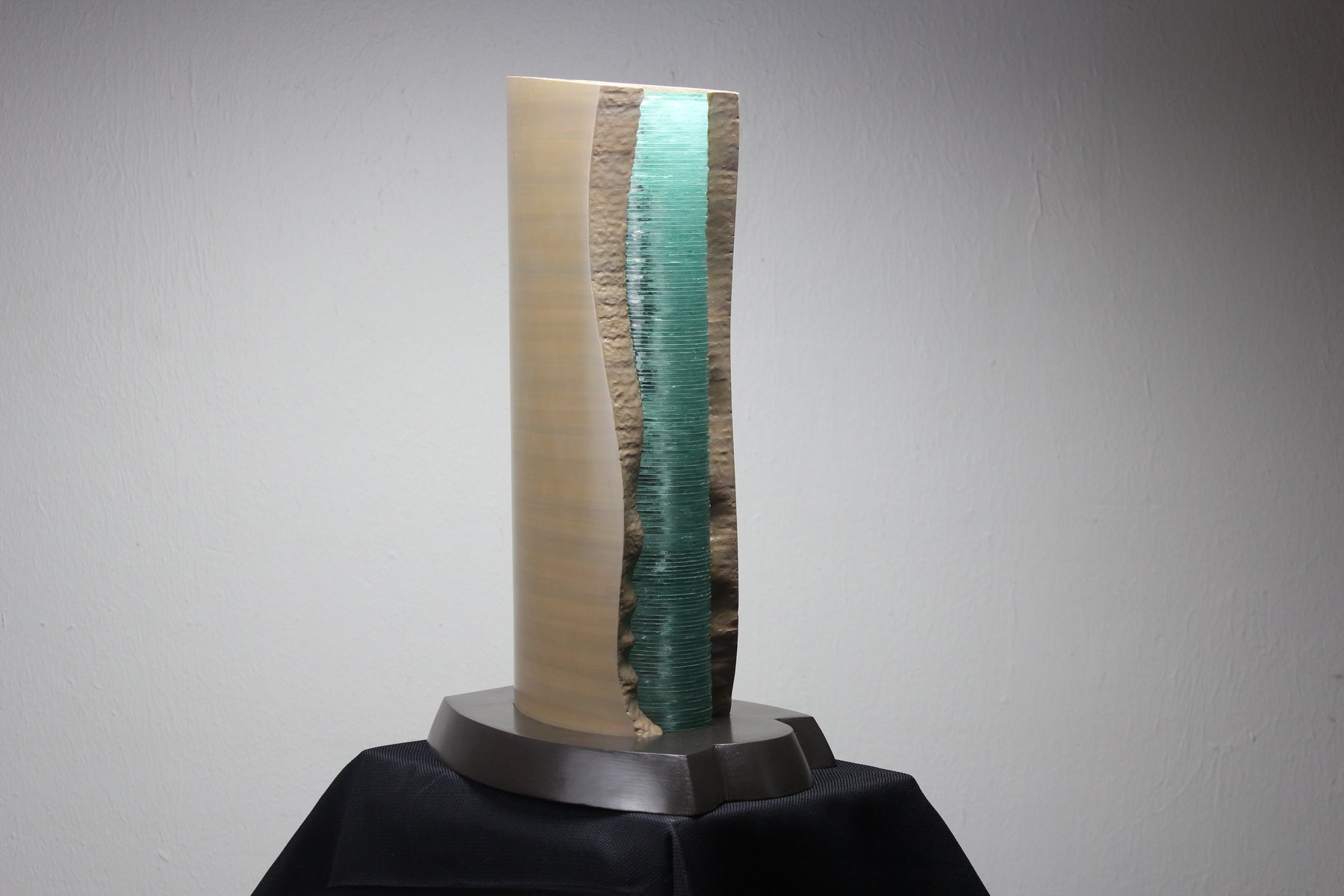
I proposed a freestanding pillar, 18 to 20 feet tall with an oval footprint, for the courtyard of the Experimental Sciences Building. The design was based on the idea of a core sample, with an exposed core of stacked glass and an outer shell of polished natural stone.
The Texas Tech University System called for exterior artwork for the circular courtyard on the west side of the building (Project No. 04-15). Because half the funding came from the 1% landscape allocation, proposals had to include landscaping. Water features were highly discouraged, and artists were asked to keep Lubbock's dry climate in mind when choosing plants.
- ClientTexas Tech University System
- Budget$235,000, all-inclusive
- StandingOne of four finalists, 2013
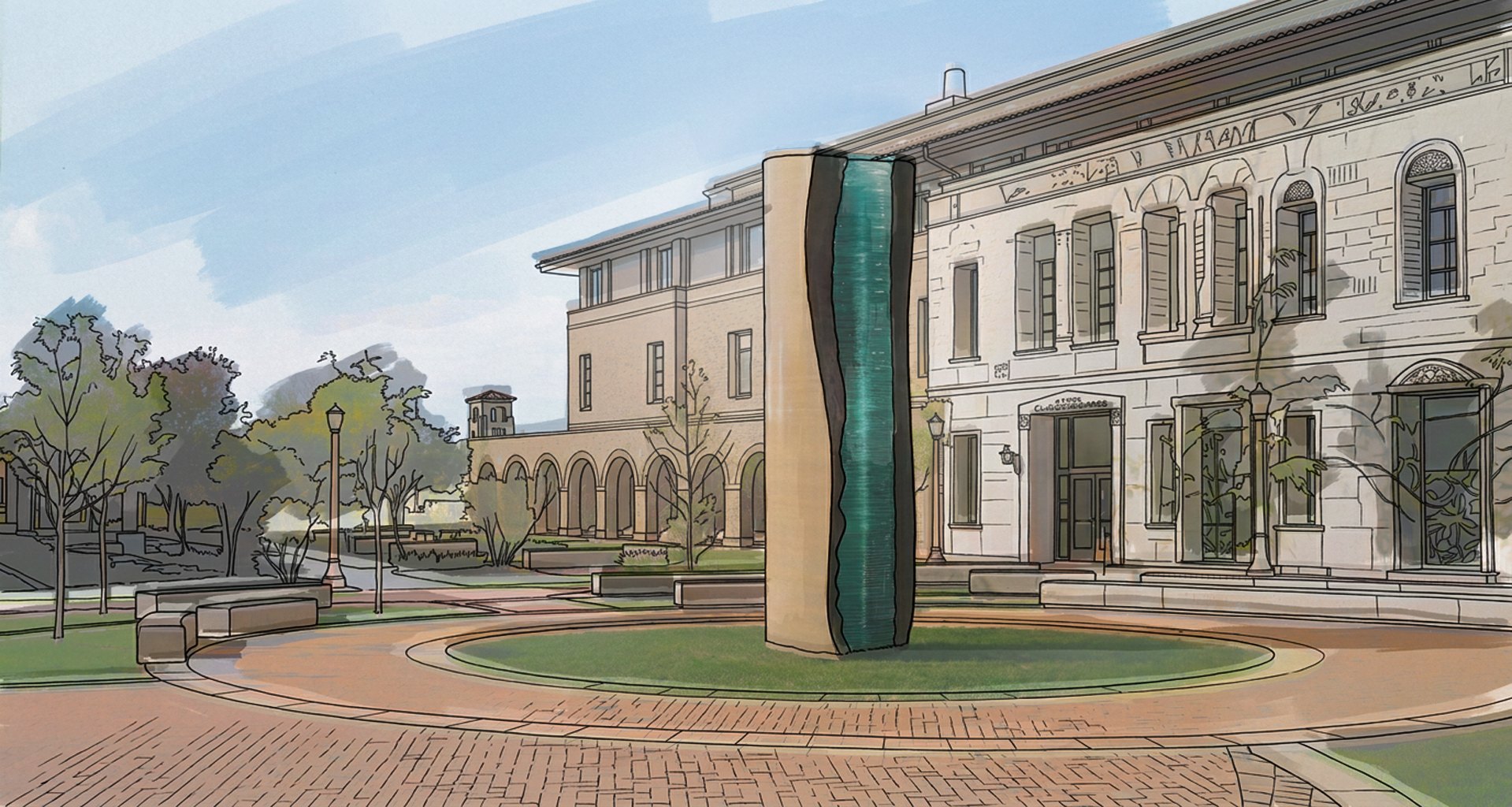
Concept rendering of the pillar in the center of the courtyard lawn.
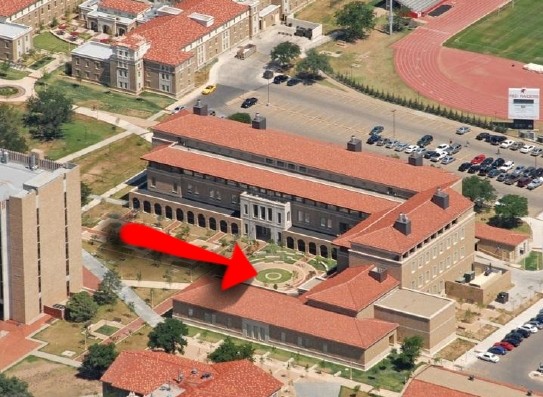
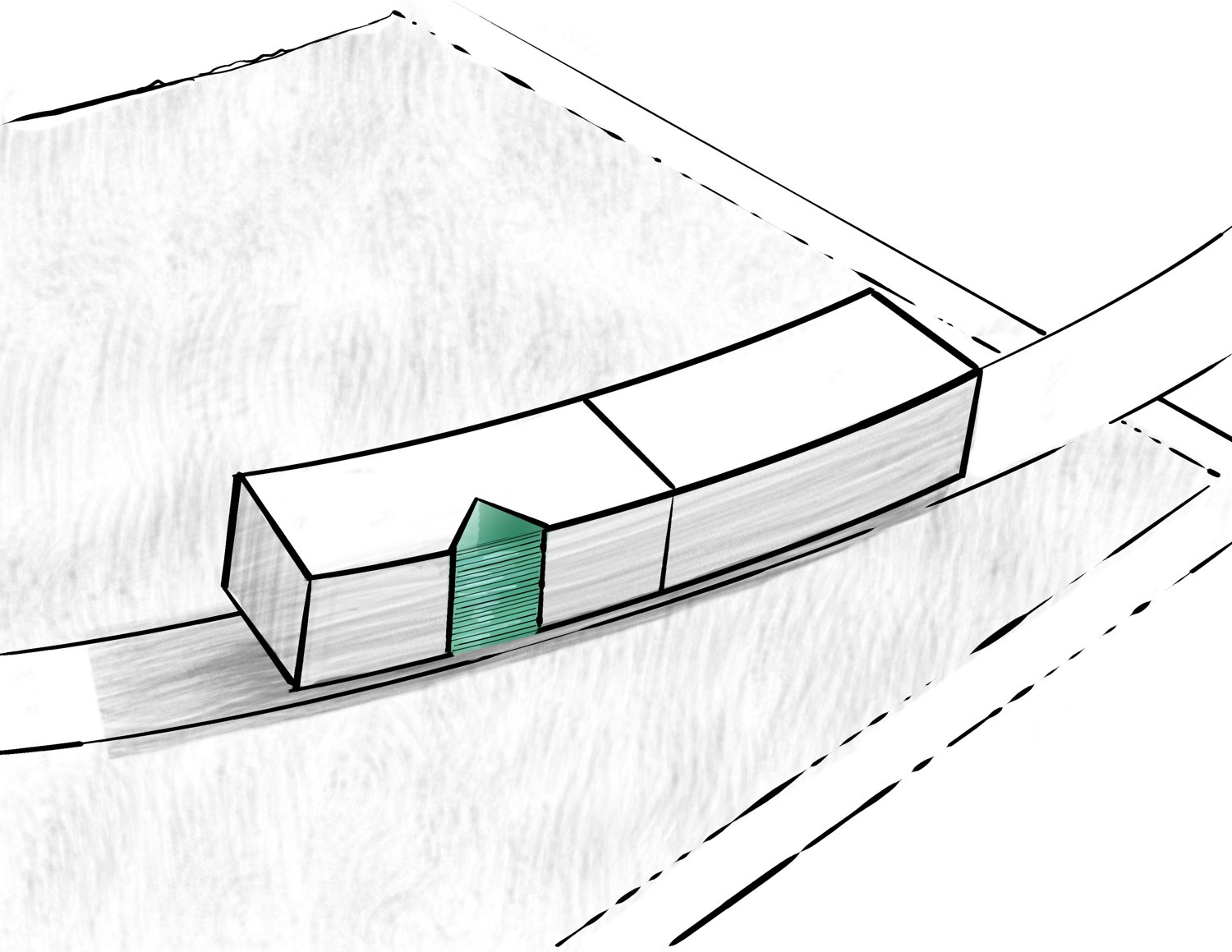
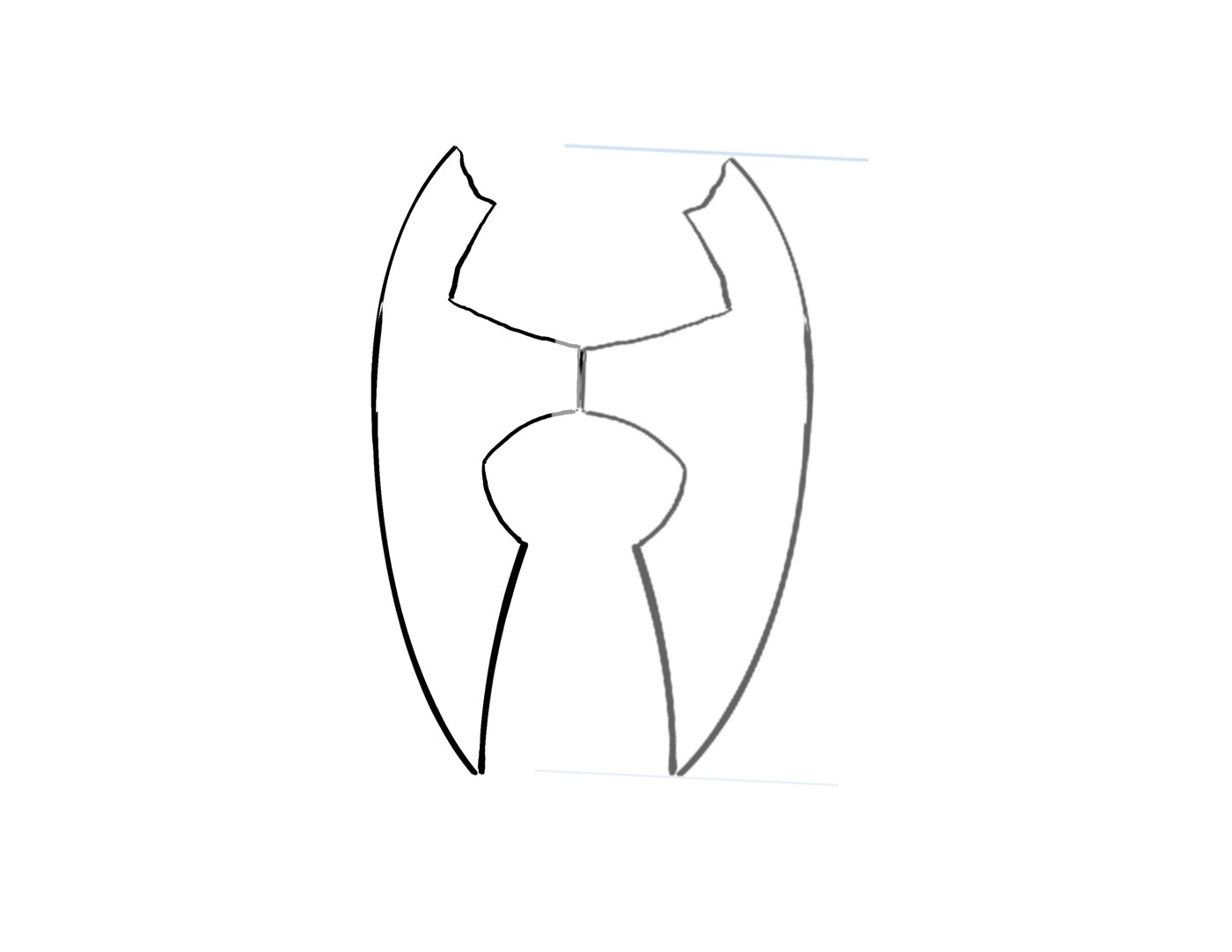
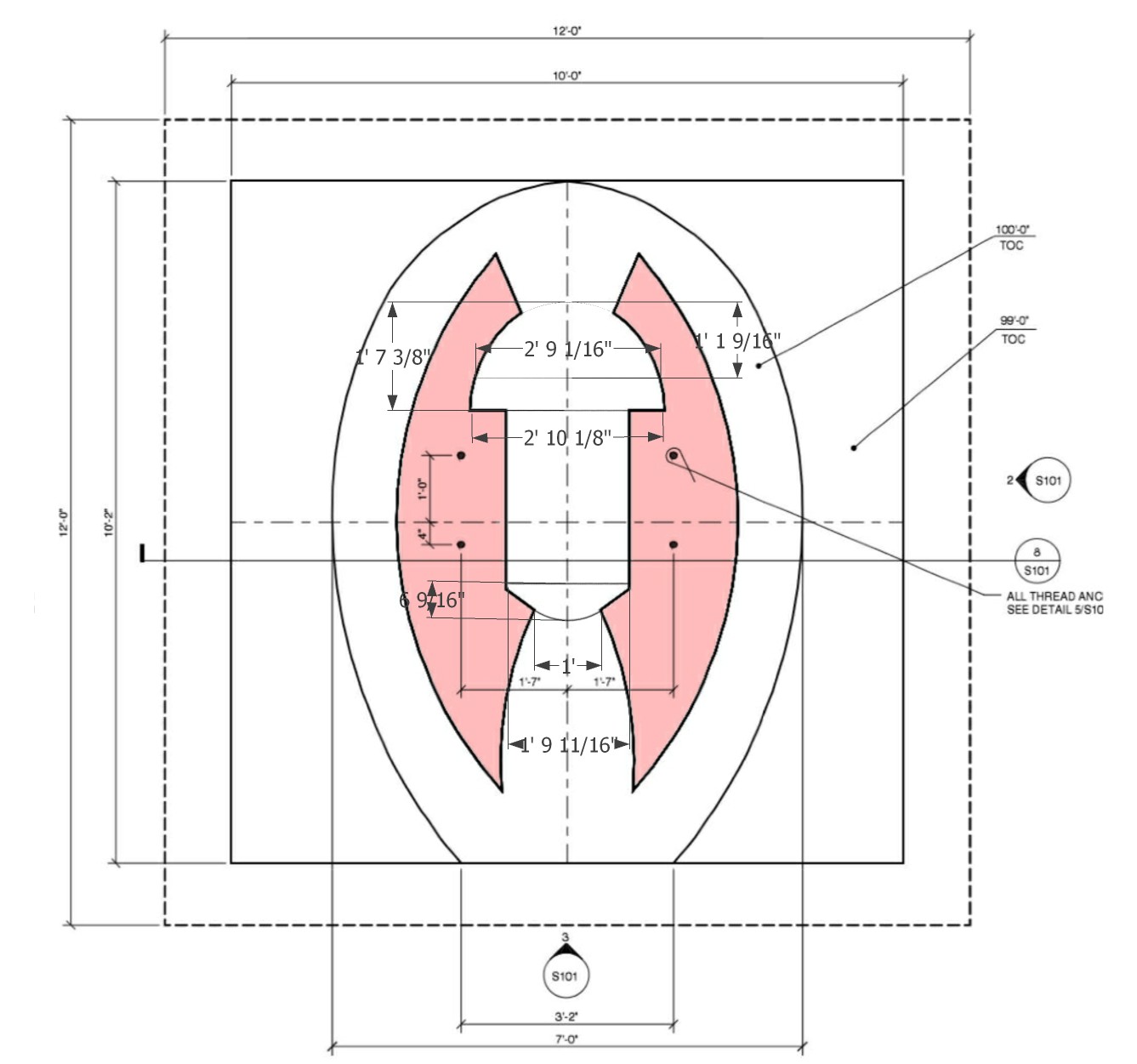
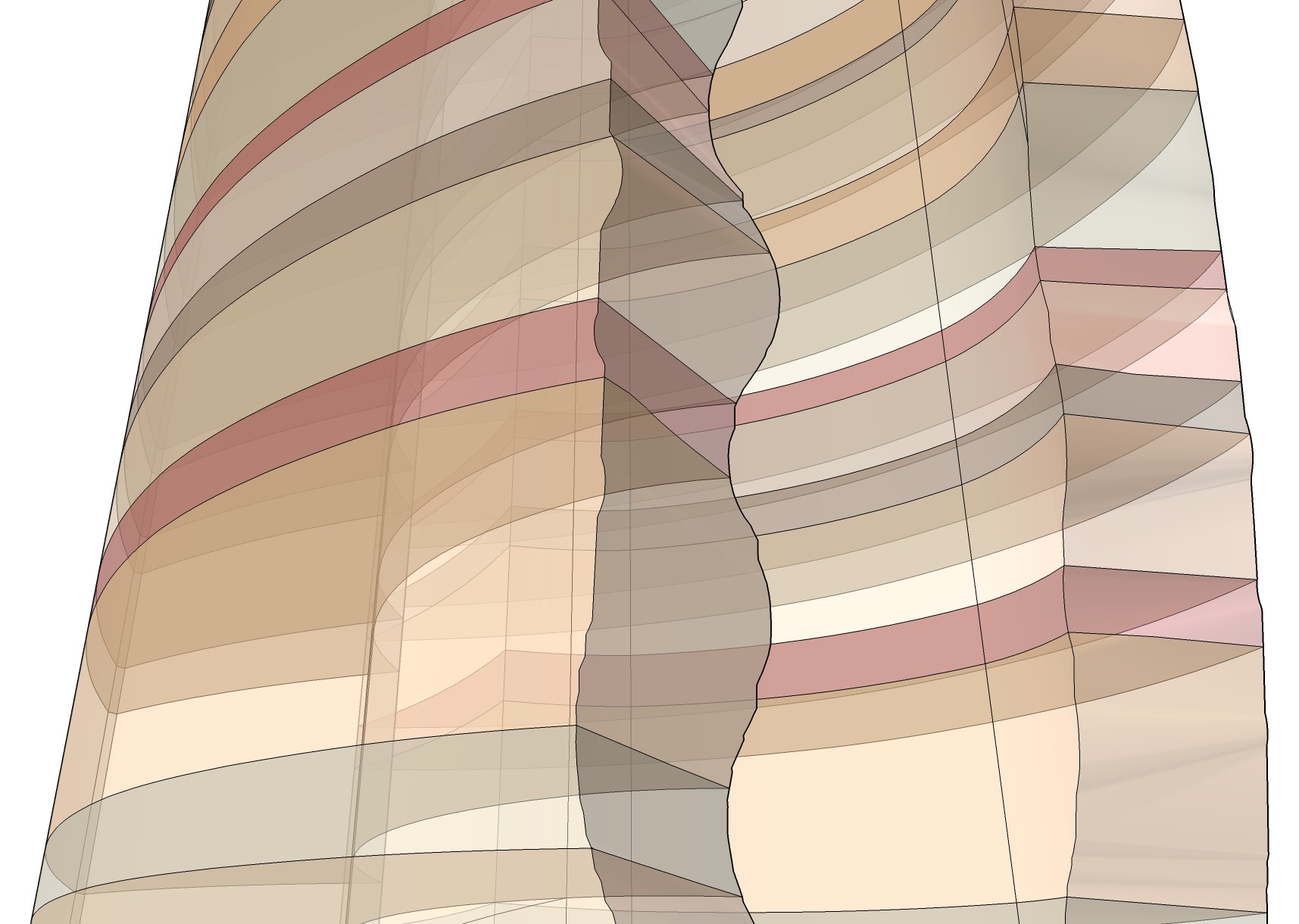
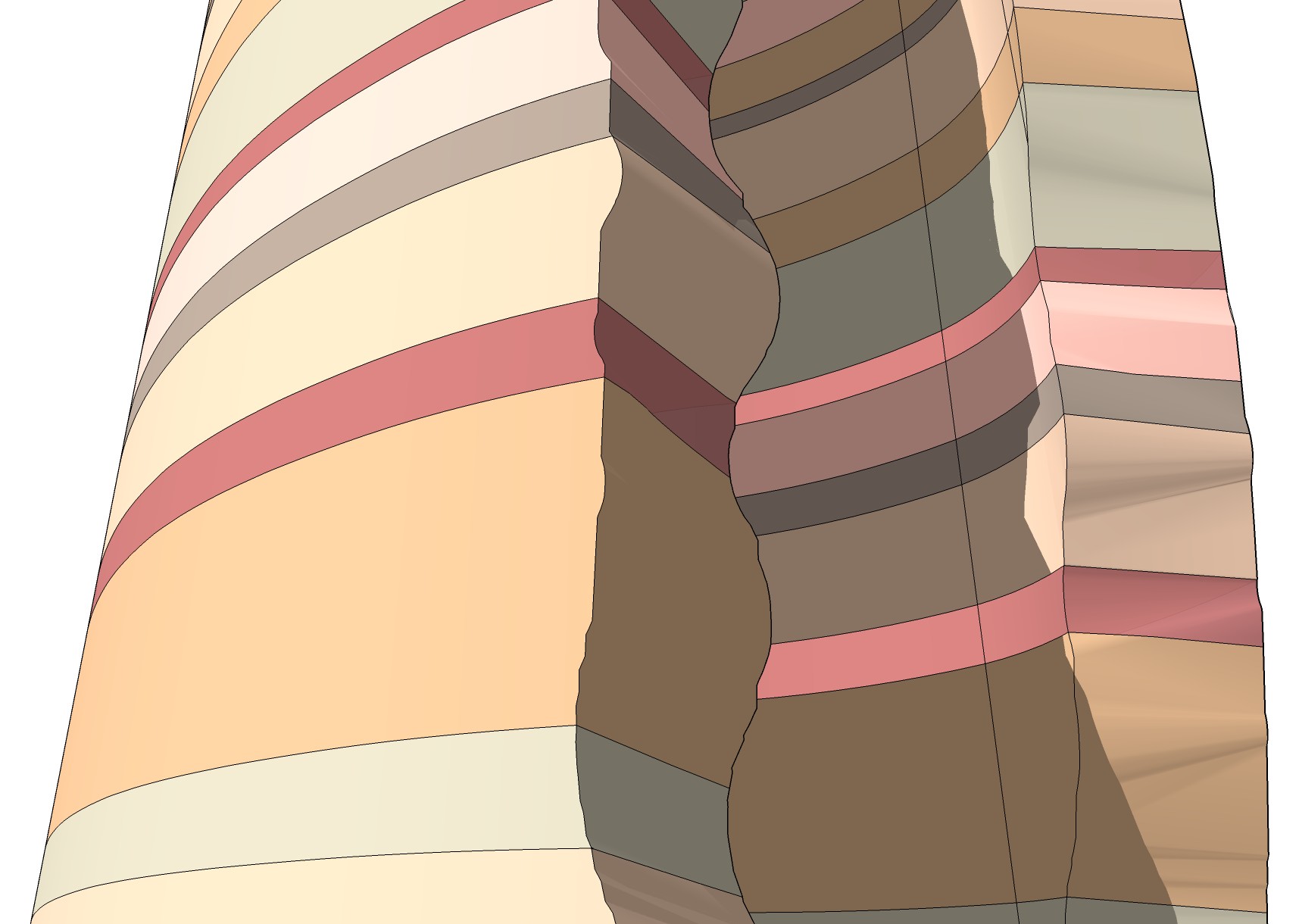
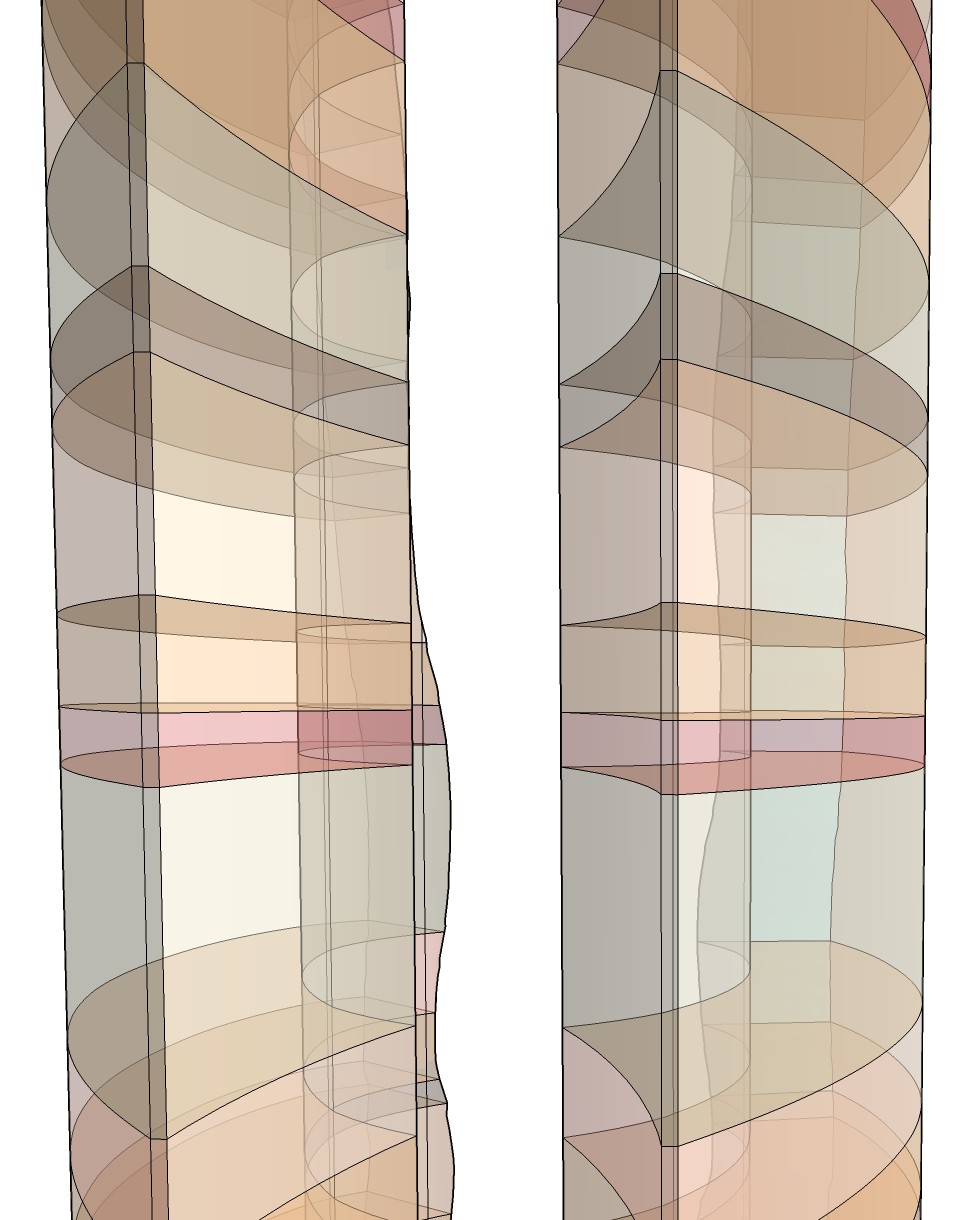
The site from above, the courtyard plan and footprint, and a dimensioned plan and color studies from the second time I pitched this concept.
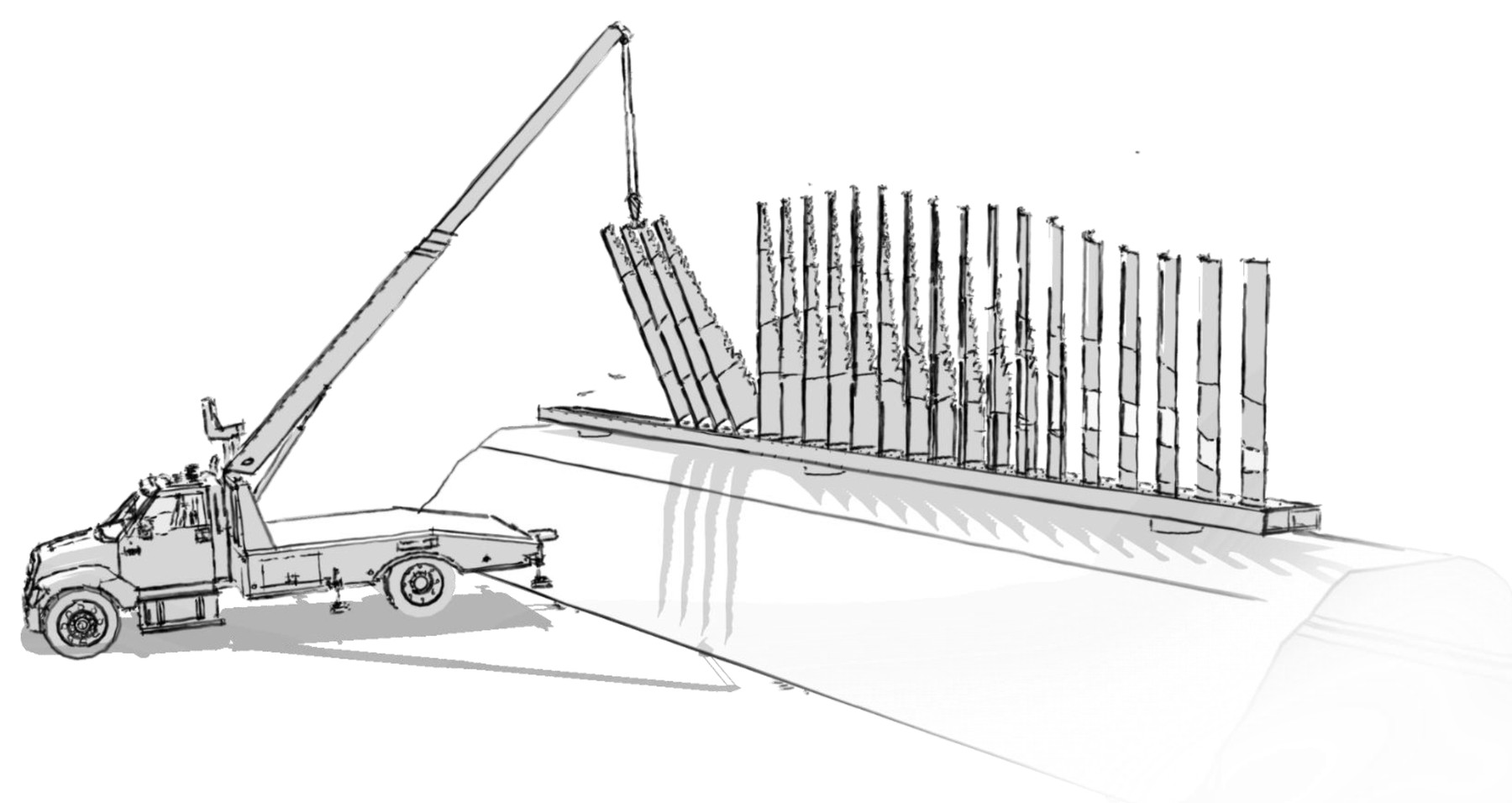
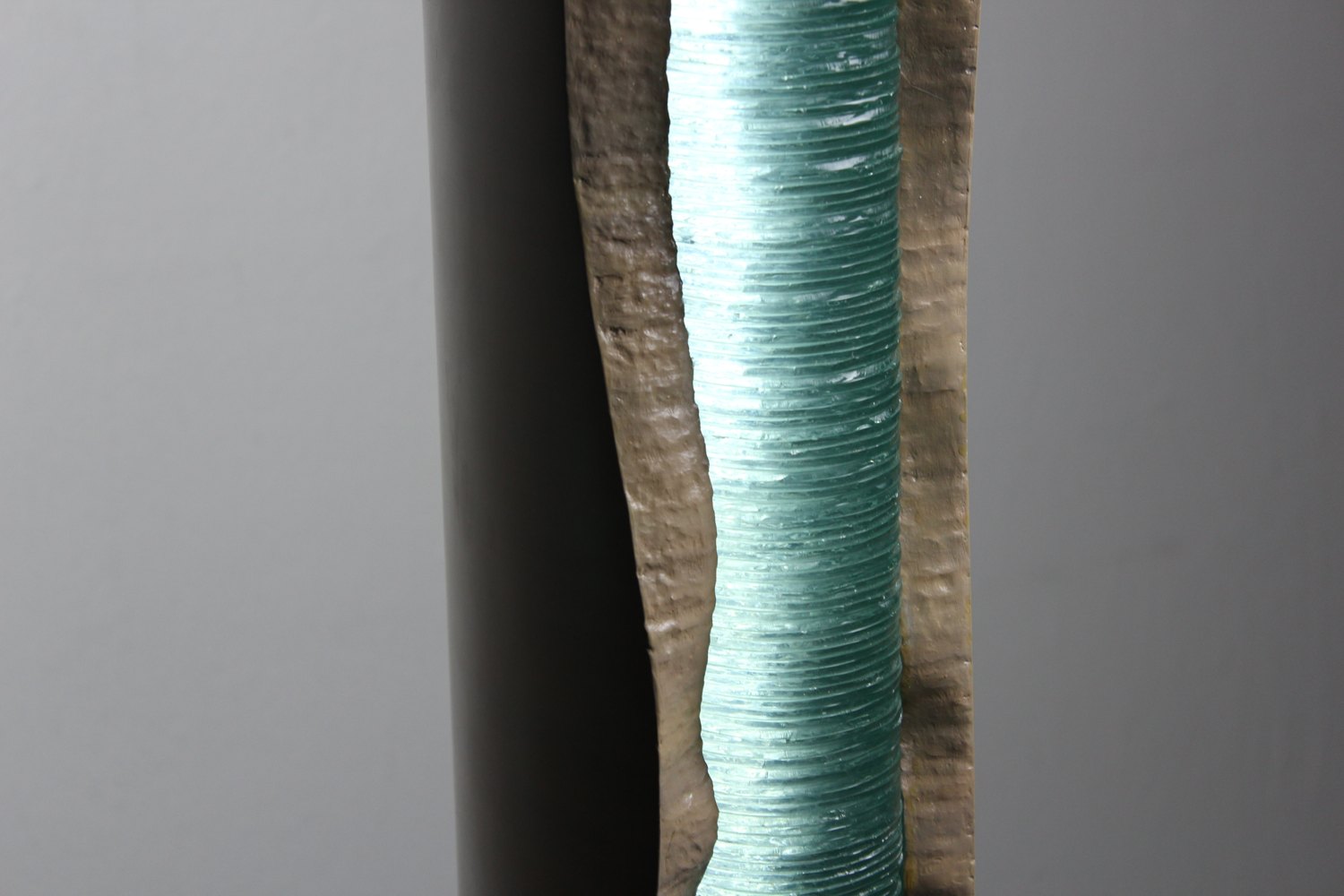
My clay maquettes include a version painted red for the stone shell and teal for the glass core, and a taller unpainted version. For the finalist round I submitted a more detailed design proposal and a model. I proposed a shell of cast and carved stone, polished by hand and attached to a steel structure at the center, with the seams placed so the stone would read as one solid piece. Final materials were still open, and I planned to work with a local architect, builder and stone fabricators.
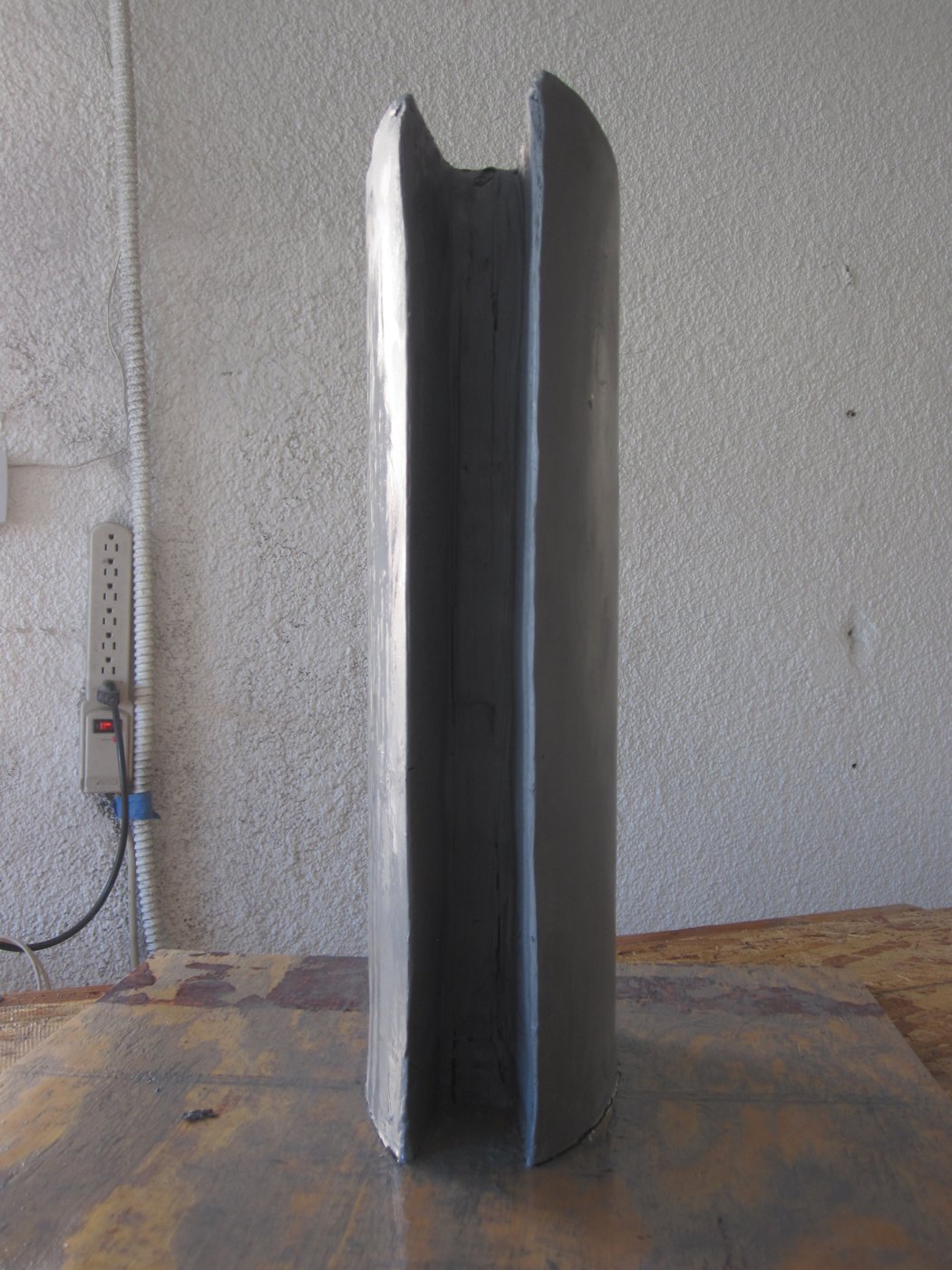
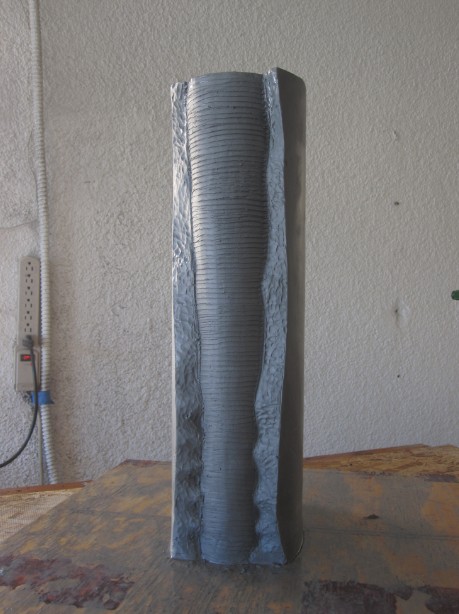
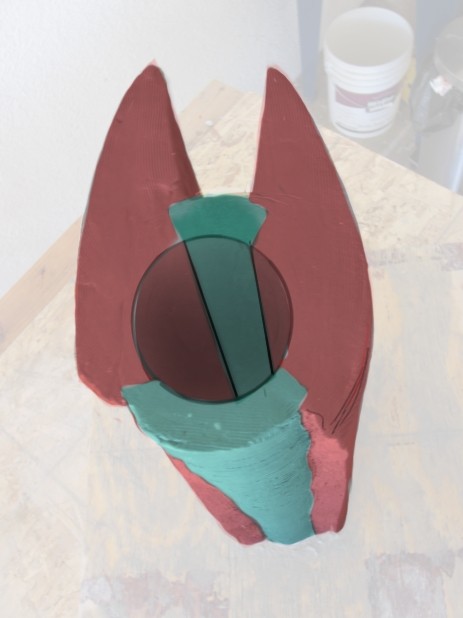
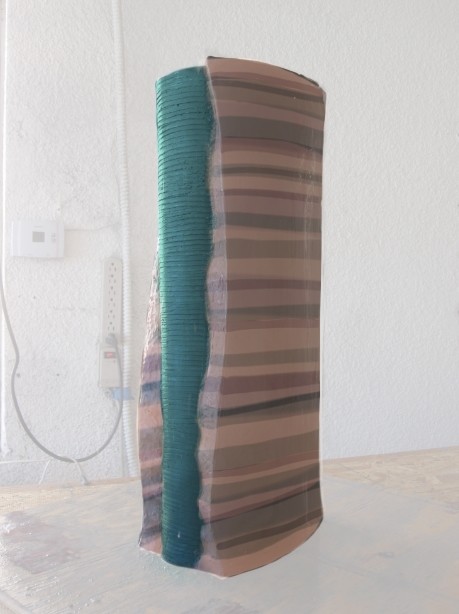
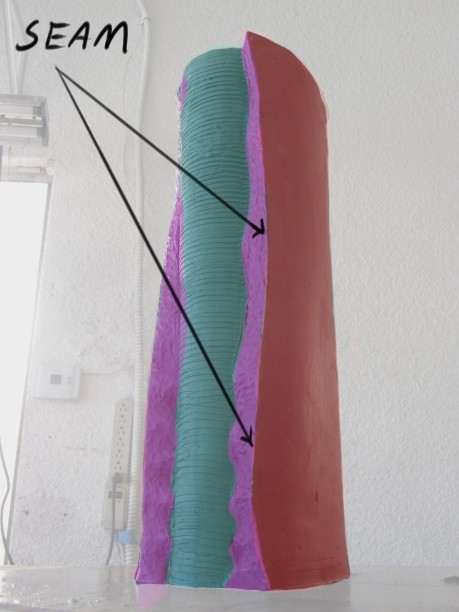
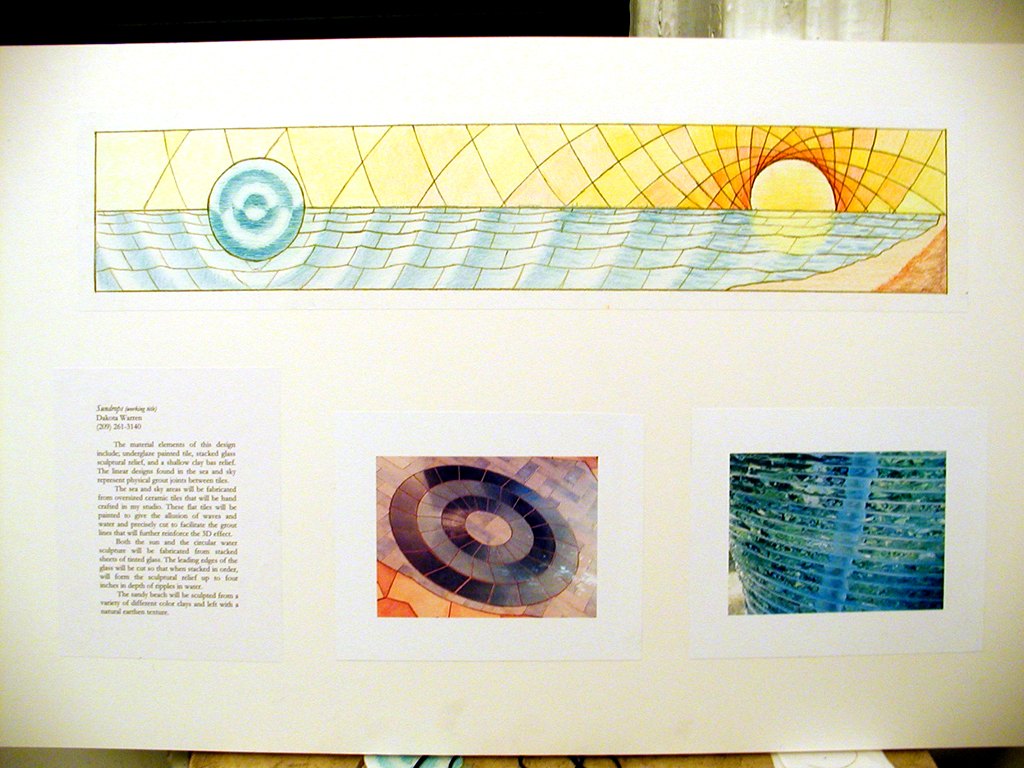
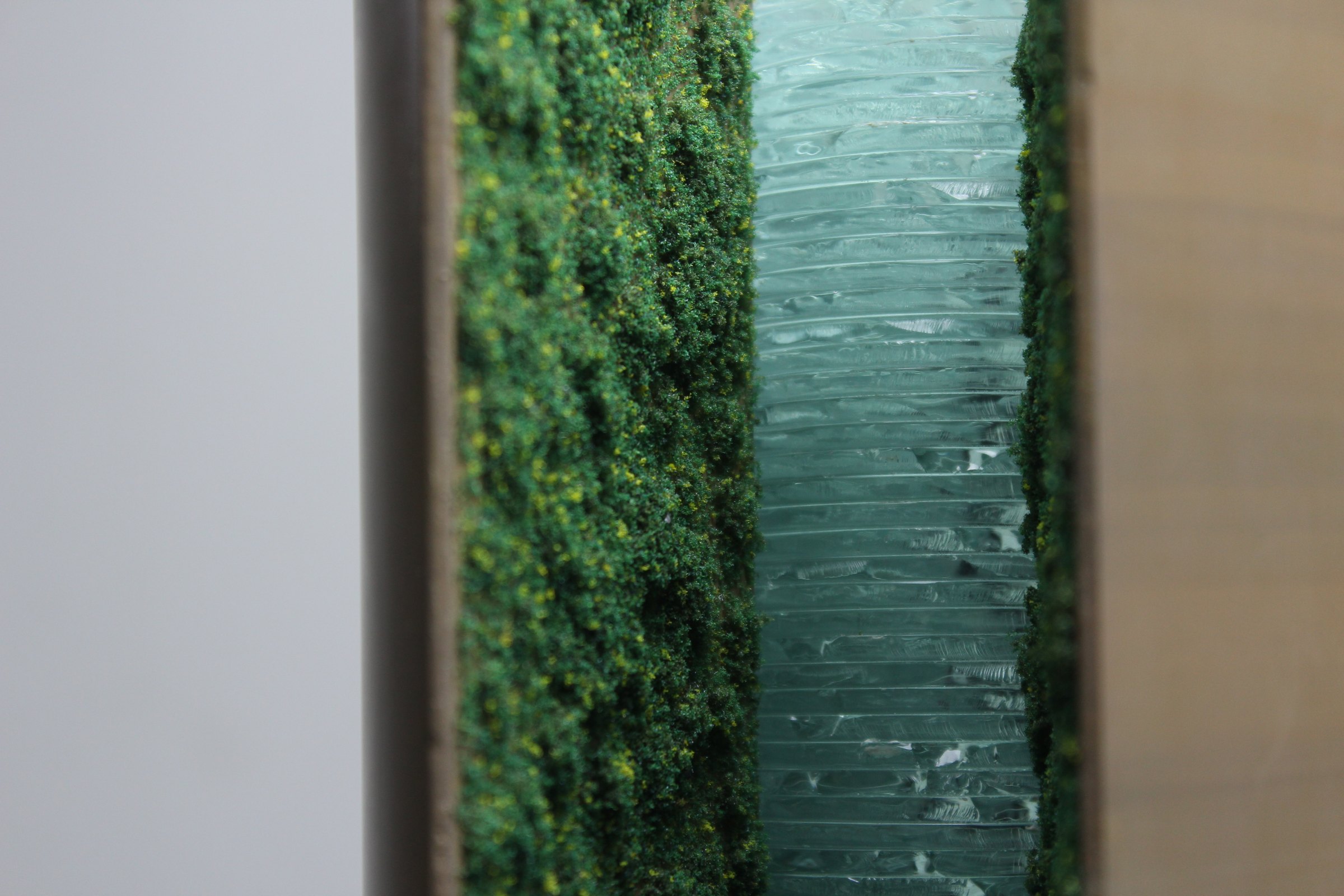
I wanted cut glass for the core because the randomness of the cut surface gives it a water-like quality. It would look wet, like a fountain with no water. Like the footprint, the glass would appear almost circular but would actually be an ellipse.
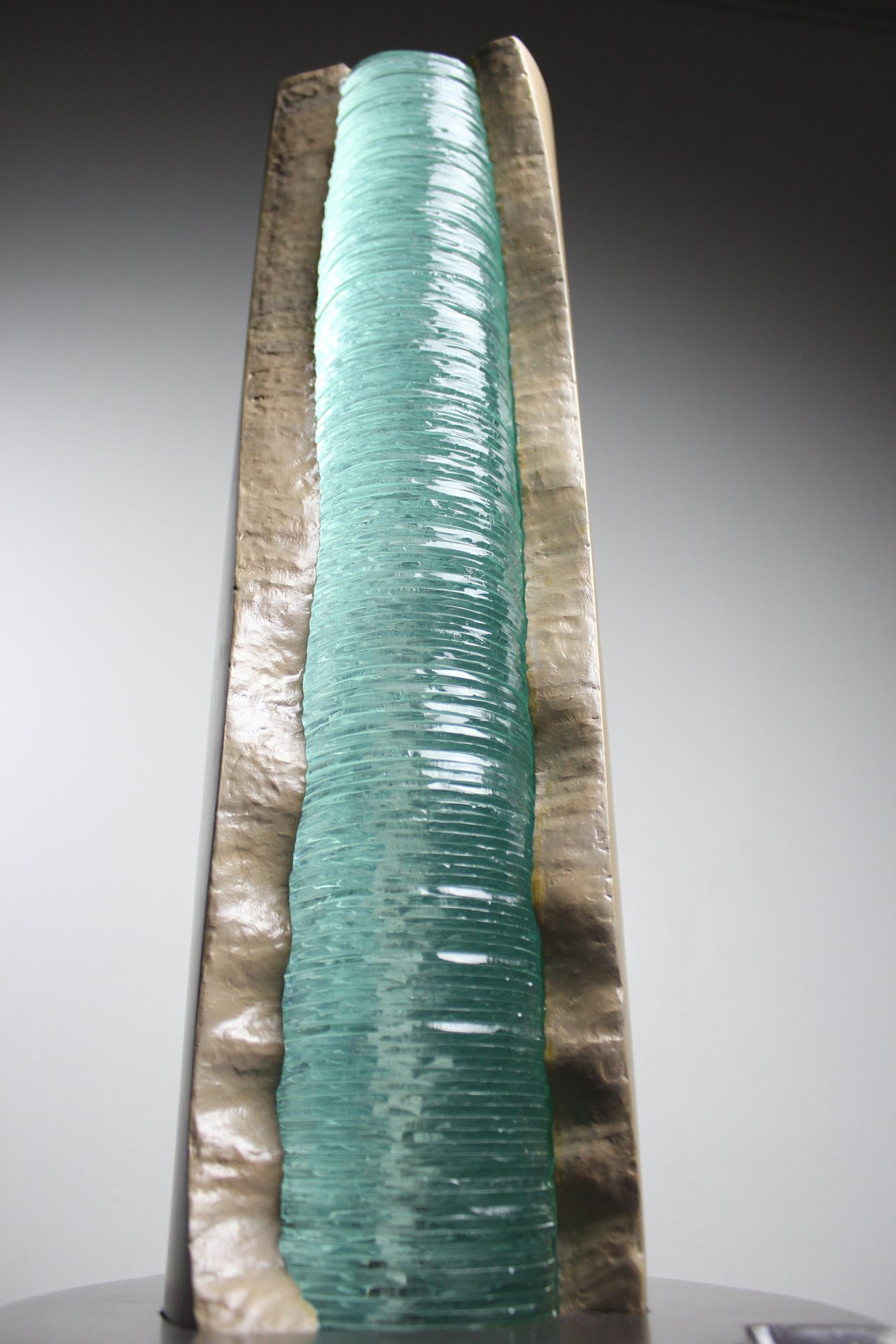
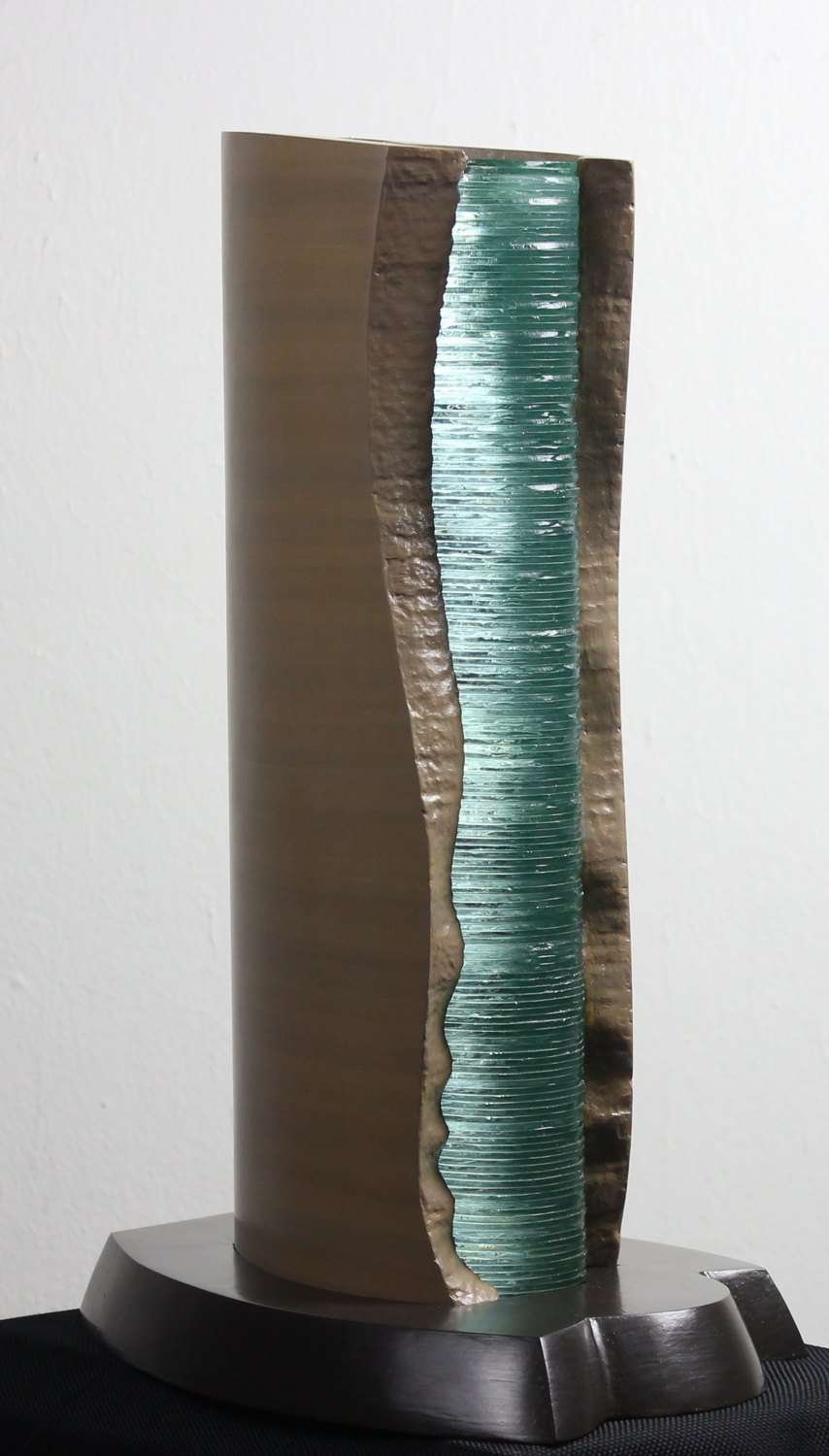
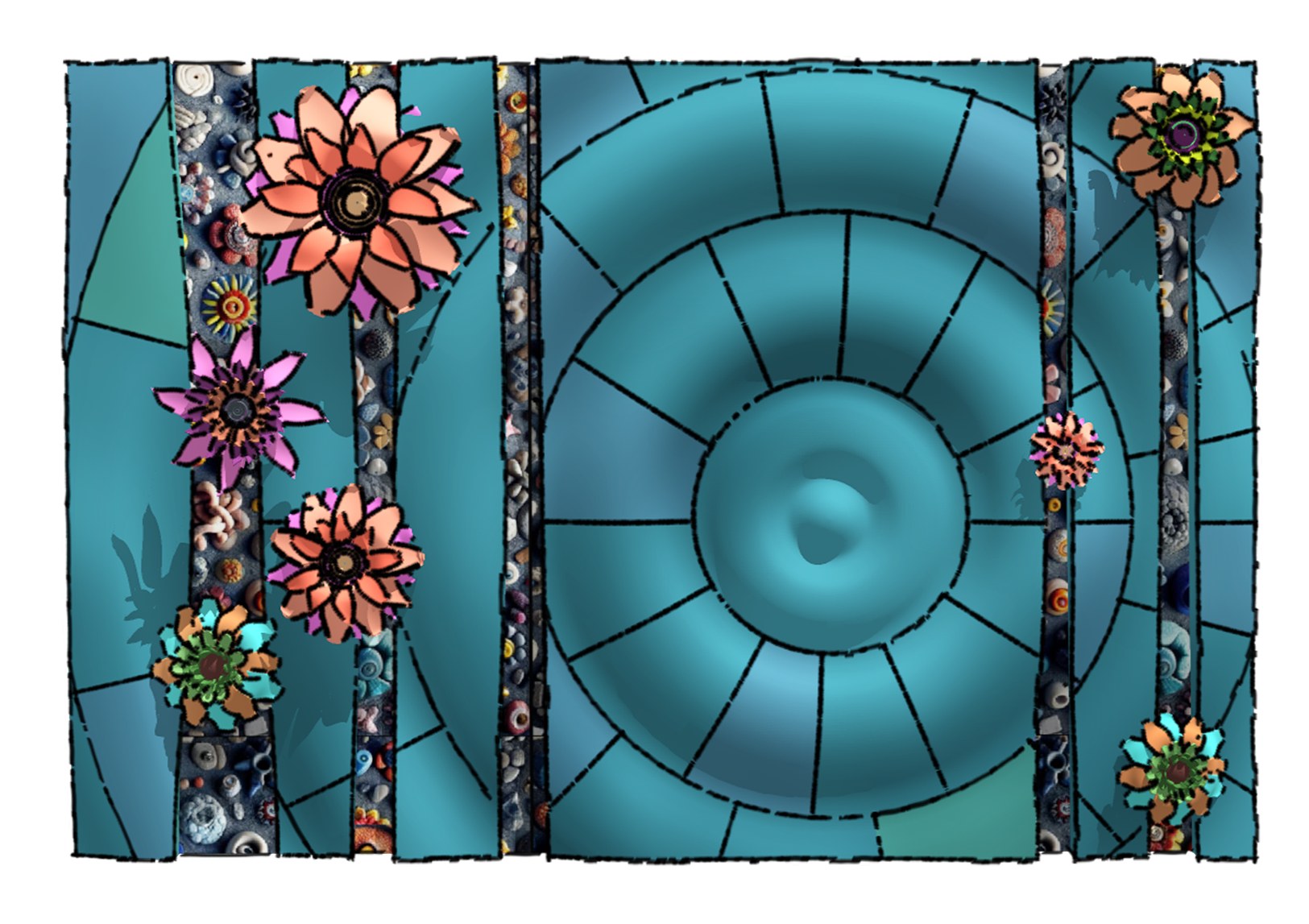
The rear of the pillar would have a deeper cutaway with an enclosed living wall of exotic plants growing on a vertical plane. The stacked glass core would cast a glow onto the wall, and the plants would change with the seasons. For the ground I proposed low-water succulents with no cactus, planted to pass for an extraterrestrial landscape. A thin ring of plants around the base would be close enough for people to touch.
“It's like a core sample is naturally jutting out of the ground.”Dakota Warren, notes for the finalist presentation